
Renewable energy projects in Australia do not attract government support because they are good for the environment. They attract government support because policymakers have concluded that the pace of deployment required to meet Australia’s emissions reduction targets will not be achieved through private capital alone. That distinction matters, because it means the funding programs that exist are designed around specific deployment gaps and strategic priorities, not general goodwill.
Understanding which program applies to your project, what it actually funds, and what it expects in return is the first engineering problem of a grant application. AGILE Consulting Engineers works with project developers and asset owners across Australia to provide the technical documentation and independent assessment that grant applications require. This guide sets out the major programs as they stand in 2025 and the practical implications for project teams.
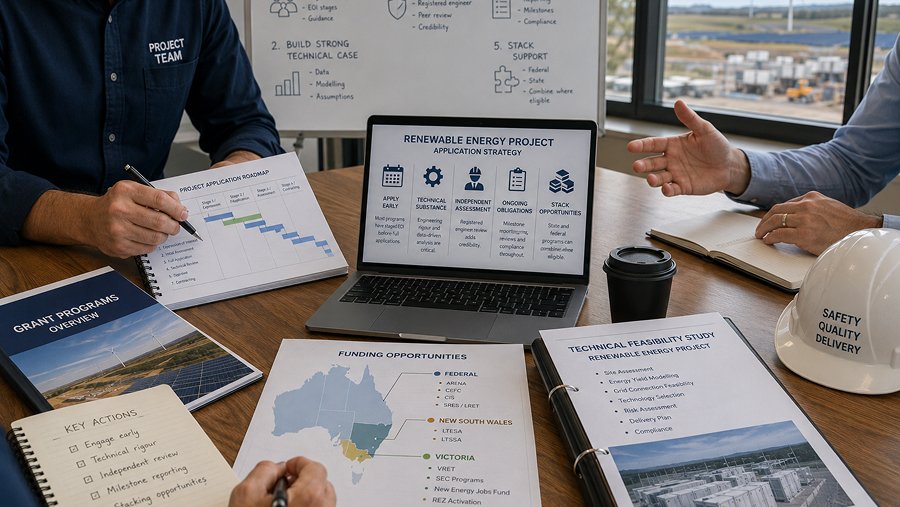
ARENA (arena.gov.au) is the federal agency responsible for improving the competitiveness and increasing the supply of renewable energy in Australia. Since its establishment, ARENA has co-funded more than 600 projects with over $2 billion in funding commitments (source: ARENA, 2024).
ARENA does not operate a single open grant round. It funds projects through targeted programs aligned to specific technology and market gaps. Current priority areas include large-scale storage, offshore wind development infrastructure, hydrogen production, and community solar and storage initiatives.
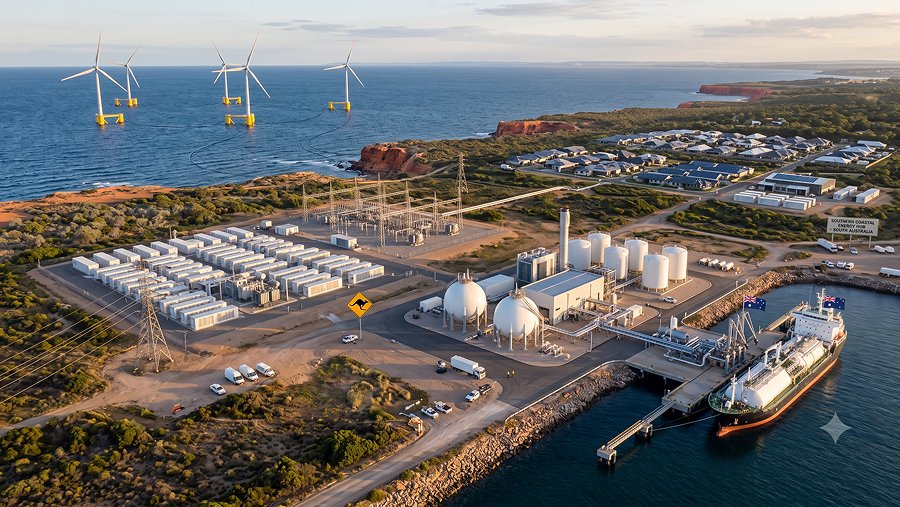
The CEFC (cefc.com.au) operates differently from ARENA. It is not a grant program. The CEFC is a government-owned green bank that provides debt and equity financing to clean energy projects on commercial terms that the private finance market does not yet offer at scale. The objective is to catalyse private investment by demonstrating that clean energy projects are bankable.
For utility-scale solar, BESS, and hybrid projects, CEFC financing can complement private debt by taking a subordinated or mezzanine position, extending loan tenors beyond what commercial banks will offer, or providing financing for technology categories that remain outside mainstream lender appetite. CEFC financing is not free money, but its terms are typically more favourable than commercial market equivalents.
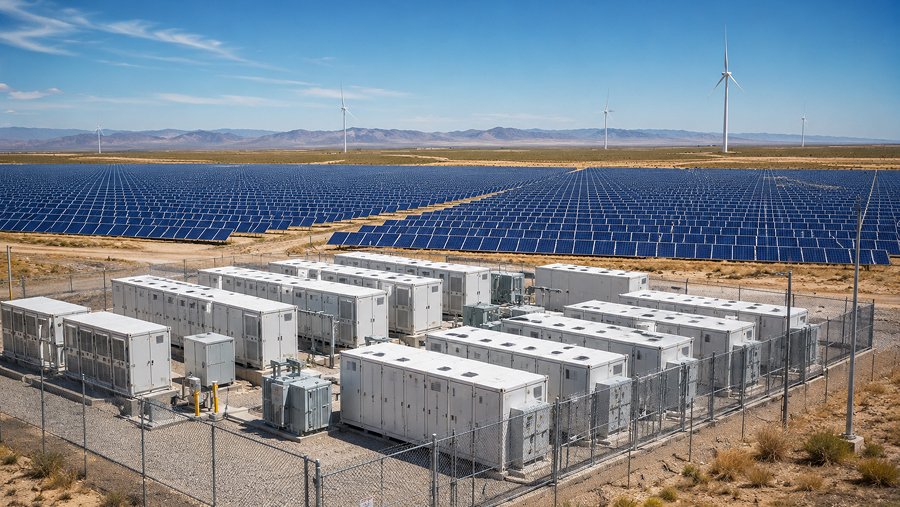
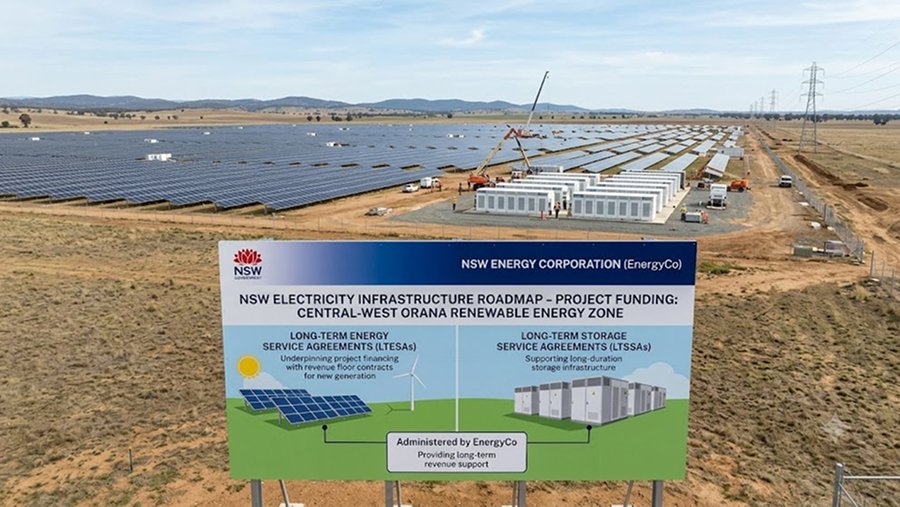
The NSW Electricity Infrastructure Roadmap provides long-term revenue support for new generation, storage, and transmission projects through Long-term Energy Service Agreements (LTESAs) and Long-term Storage Service Agreements (LTSSAs). These offer revenue floor contracts that underpin project financing, administered by the NSW Energy Corporation (EnergyCo).
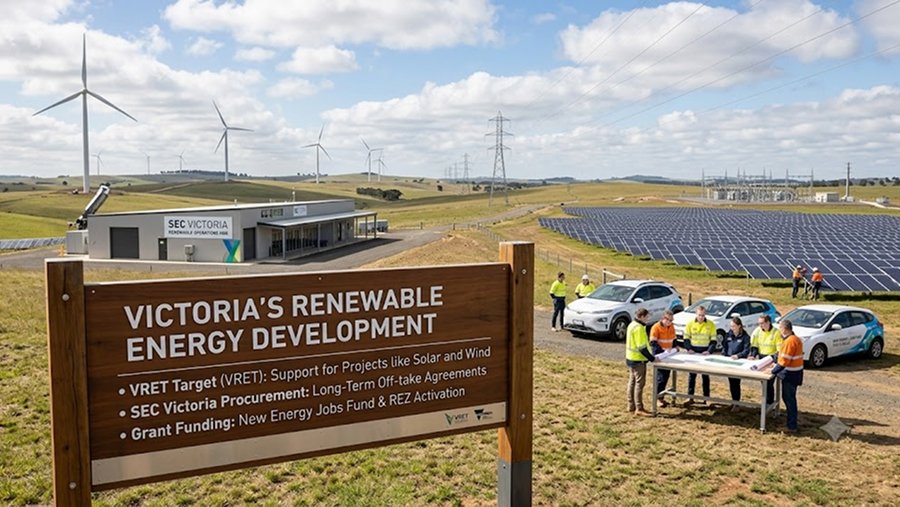
The Victorian Renewable Energy Target (VRET) and the State Electricity Commission (SEC) Victoria’s renewable procurement programs provide both direct funding support and long-term off-take agreements for eligible projects. Victoria has also provided grant support through the New Energy Jobs Fund and Renewable Energy Zone activation programs.
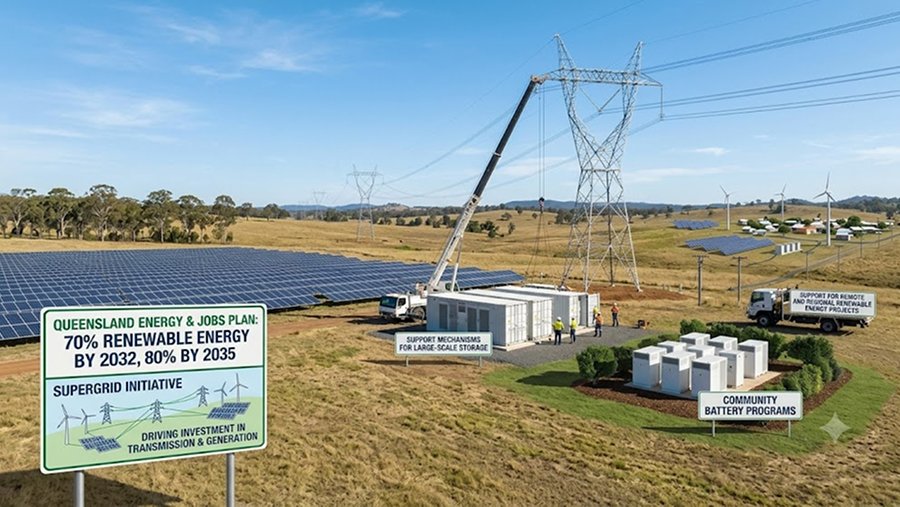
Queensland’s Energy and Jobs Plan commits to 70% renewable energy by 2032 and 80% by 2035. The state’s SuperGrid initiative is driving investment in transmission and generation, with specific support mechanisms for large-scale storage. Queensland also has community battery programs and support for remote and regional renewable energy projects
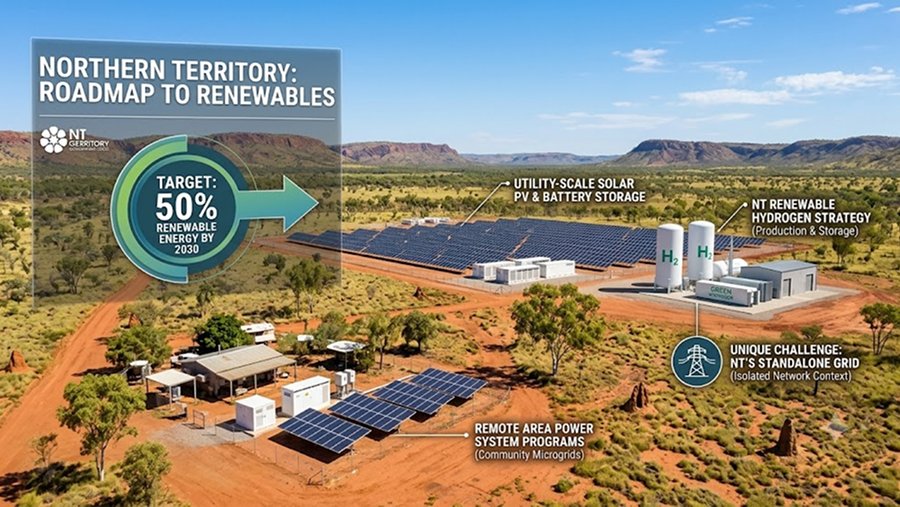
The NT Government’s Roadmap to Renewables targets 50% renewable energy by 2030. The Territory’s Renewable Hydrogen Strategy and remote area power system programs provide specific funding pathways for NT-based projects. Given the NT’s standalone grid and the particular challenges of remote community power supply, NT-specific programs are directly relevant to AGILE’s operating context.
The Capacity Investment Scheme (CIS) provides revenue underwriting for new dispatchable capacity, including storage, through competitive tender processes. The scheme is designed to underpin the investment case for projects that the private market would not finance without revenue certainty.
The Small-Scale Renewable Energy Scheme (SRES) and Large-Scale Renewable Energy Target (LRET) continue to provide certificate-based incentives, though the LRET is scheduled to reach its 33,000 GWh target and the scheme’s future shape is subject to ongoing policy development.
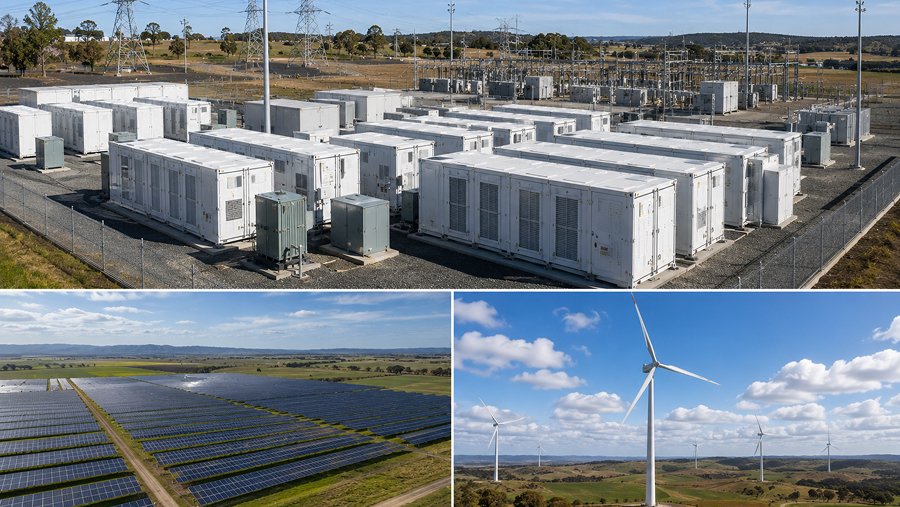
Regardless of which program you are applying to, robust technical documentation is a prerequisite. Programs like ARENA require independent technical assessment to validate feasibility claims, performance assumptions, and technology selection rationale. Common requirements include:
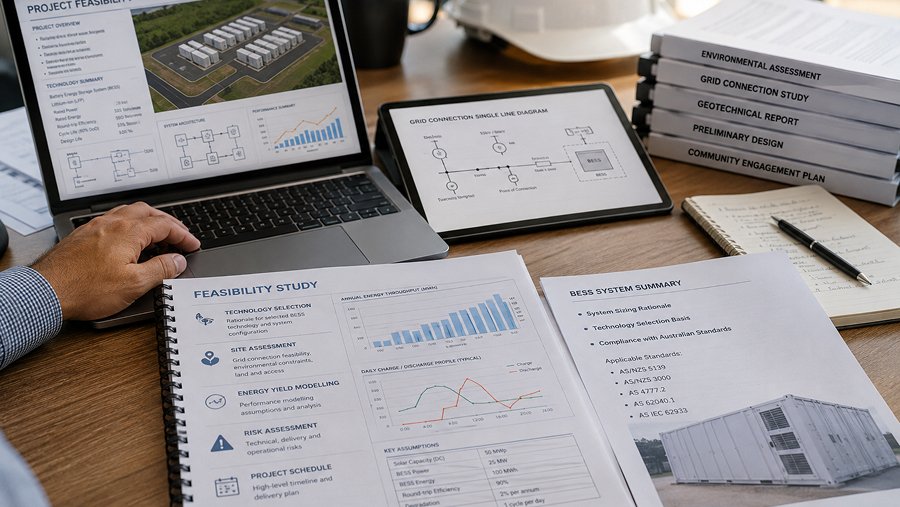
If you are preparing a grant application for a solar, BESS, or hybrid renewable energy project and need independent technical documentation to support it, that is work we do regularly. We provide feasibility assessments, technology review, and independent engineering sign-off in the format that programs like ARENA expect.
ARENA’s focus has shifted primarily toward utility-scale and emerging technology projects. Smaller projects may have better access through state-level programs or through aggregated funding rounds designed for community-scale installations. It is worth checking ARENA’s current open funding rounds directly, as priorities evolve.
The CEFC has funded projects in remote and regional Australia, though its focus is generally on projects with a clear commercial pathway. Remote area projects may benefit from CEFC financing if they have a credible off-take or revenue model, even if that model is based on diesel displacement savings rather than NEM market participation.
The Capacity Investment Scheme (CIS) provides revenue underwriting, not capital grants. It is designed to de-risk the revenue stream of new dispatchable generation and storage projects through a contract-for-difference style mechanism. ARENA provides capital co-funding for project development. The two mechanisms address different financing barriers.
It depends on the program and jurisdiction. Some programs explicitly require documentation prepared or reviewed by a registered professional engineer. Even where not mandated, independent professional engineering assessment substantially strengthens an application and is standard practice for projects of any material scale.
Yes. ARENA has funded remote community energy projects, and several state programs have specific streams for off-grid or remote areas. For Pacific island nations, development finance institutions including the Asian Development Bank and the Green Climate Fund are the primary funding sources. The technical requirements and application processes differ significantly from domestic programs.
ARENA’s process varies by funding round, but from initial expression of interest through to a funding offer typically takes six to twelve months for competitive rounds, and can be longer for large or complex projects. Planning for this timeline is important, particularly if the project is development-stage and capital constrained.
AGILE Consulting Engineers provides independent technical documentation for renewable energy grant applications, including feasibility studies, technology assessments, and independent engineering review. Contact us to discuss what your application requires.