Most battery energy storage system (BESS) projects in Australia do not fail at the technology level. They fail at the interface between what the original equipment manufacturer (OEM) promises and what the grid, the site, and the asset owner actually need. That gap is where AGILE Consulting Engineers operates.
We are an independent BESS engineering consultancy based in Darwin, serving project developers, asset owners, and EPC contractors across Australia. Our role is not to sell you a battery system. It is to make sure the one you select, design, and commission actually performs to contract and to grid code across its operating life.
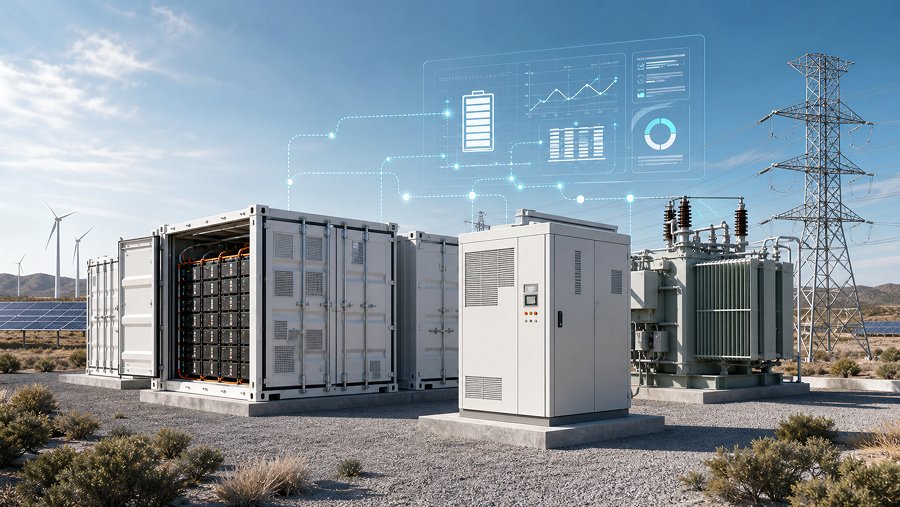
Battery Energy Storage Systems (BESS) combine electrochemical storage cells, racks, containerised enclosures, a Power Conversion System (PCS), transformers, an Energy Management System (EMS), and in grid-connected projects, a SCADA interface. Each layer introduces its own engineering risk.
The Australian market has seen rapid deployment of utility-scale BESS, driven by the National Electricity Market (NEM) and state government storage targets. As of 2024, Australia had more than 3 GW of large-scale storage either operational or in advanced development (source: AEMO 2024 Electricity Statement of Opportunities). The pace of deployment has outrun the availability of experienced, independent BESS engineers. That skills shortfall creates real delivery risk.
An independent BESS engineering consultant protects your interests at every stage, from technology selection through to Site Acceptance Testing (SAT) and commercial operation. We are not aligned to any OEM or EPC contractor, which means our technical advice is objective.
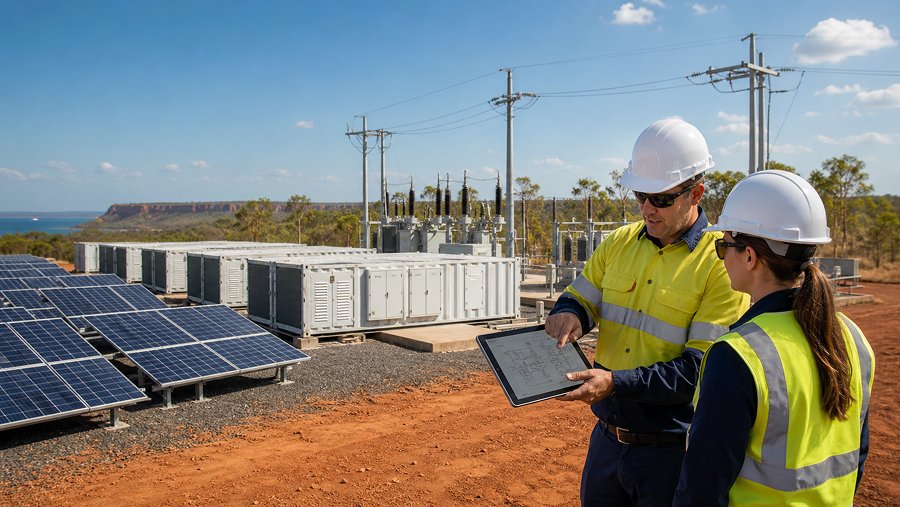
The most consequential decisions in a BESS project are made before a single piece of equipment is ordered. We work with developers and landowners to assess site suitability, define the technical brief, size the system in terms of megawatt power capacity versus megawatt-hour energy capacity and duration, select the battery chemistry and topology, and produce a high-level financial model aligned to the project’s intended use case.
Use cases we regularly work across include grid firming for variable renewable energy, Frequency Control Ancillary Services (FCAS) participation in the NEM, energy arbitrage, congestion relief, and embedded network applications. Each use case drives a different sizing methodology and a different risk profile in the EMS configuration.
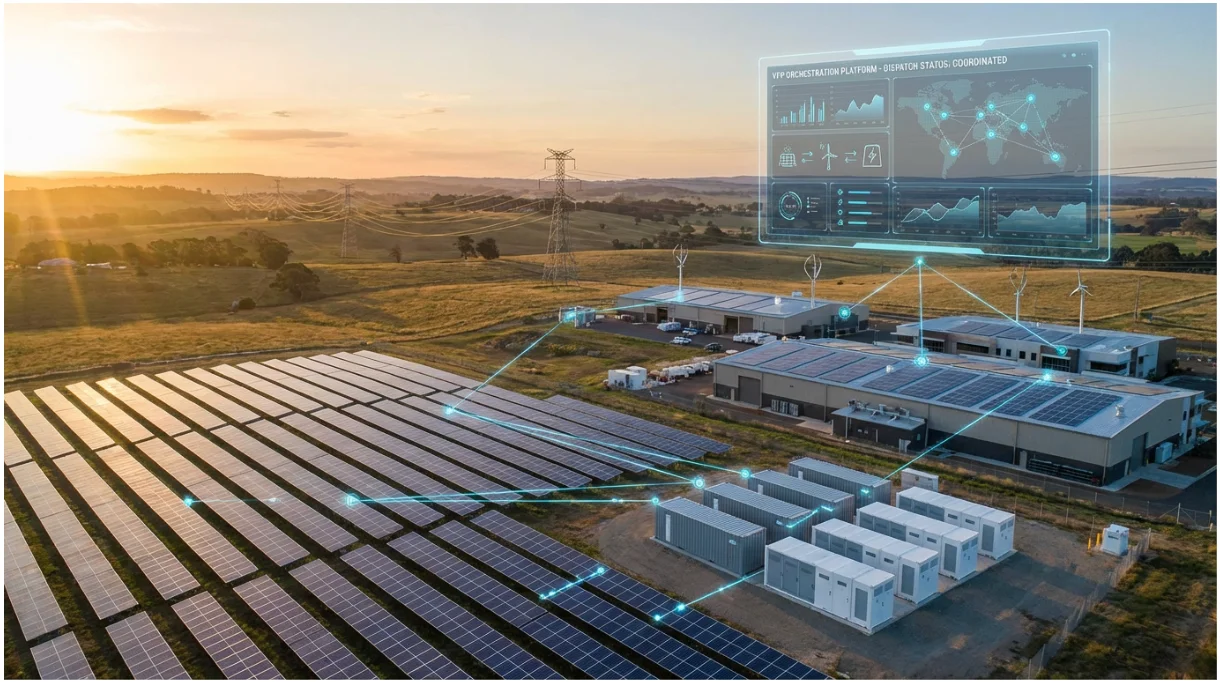
When an OEM or EPC submits a BESS design package, the asset owner needs an independent technical authority to review it. We conduct systematic technical due diligence against IEC standards, AS/NZS electrical requirements, AEMO connection requirements, and the project’s own performance specifications.
This includes Factory Acceptance Test (FAT) witnessing, Pre-Shipment Inspection (PSI) at the point of manufacture or port, interface compatibility assessments covering Balance of Plant (BoP), earthing systems, protection coordination with LV/MV switchgear, controls integration, and fire detection and suppression systems.

BESS projects connecting to the NEM or to state-managed networks require grid connection studies. We support developers through the connection application process, review OEM-supplied dynamic models, and work with network service providers to address technical queries. For projects in the Northern Territory, where the grid is managed independently of the NEM by Power and Water Corporation (PWC), we have specific expertise in the NT connection framework.
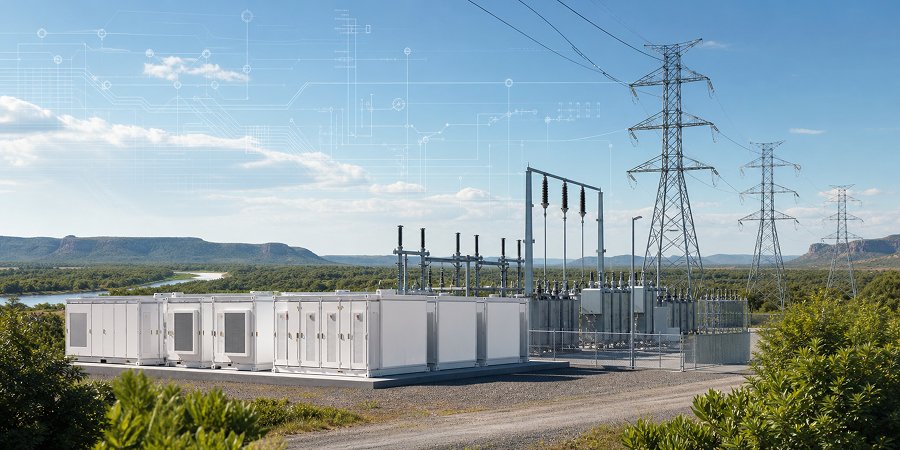
BESS installations at MV connection points require careful protection philosophy design. We review protection settings for overcurrent and earth fault relays, assess upstream and downstream grading coordination, and conduct arc flash hazard assessments that comply with applicable Australian standards. This work is essential for both safety and insurance purposes.
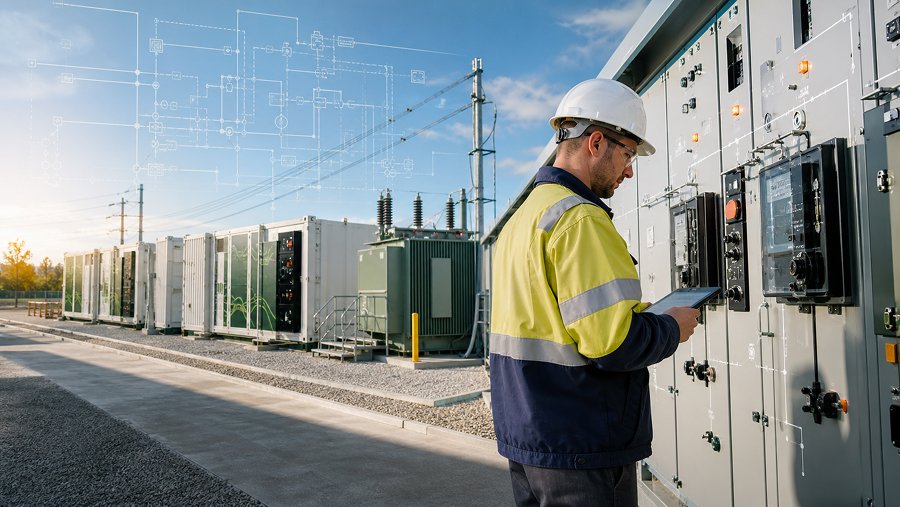
Commissioning a utility-scale BESS is not a formality. It is the point at which design assumptions meet physical reality. We provide technical oversight during SAT, conduct gap analysis between commissioning results and agreed performance specifications, and document any defects or performance shortfalls that need to be resolved before the project transitions to commercial operation.
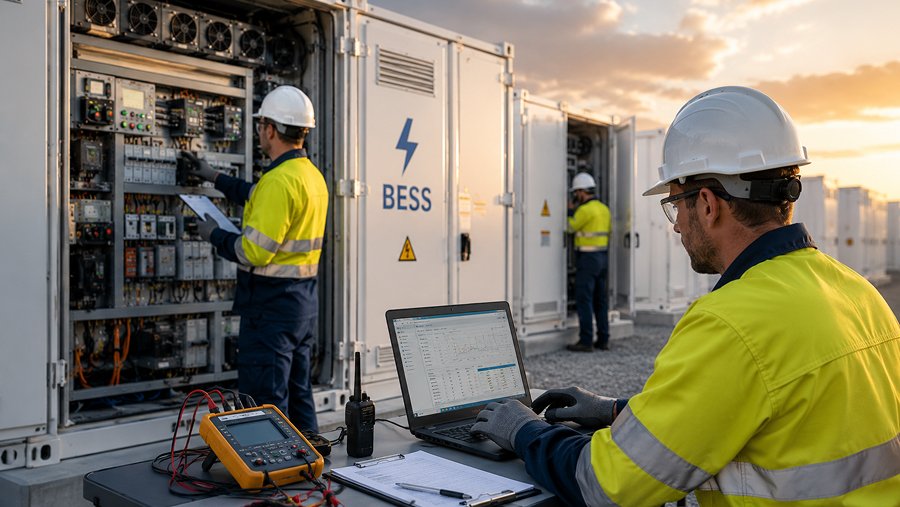
If you are seeing conflicting specifications between your OEM’s design pack and your connection agreement, that is a common early warning sign of interface risk. A focused technical review at that stage is far less costly than a commissioning delay. We are happy to share what that review typically covers.
An EPC (Engineering, Procurement, and Construction) contractor is responsible for delivering the physical project. An independent BESS engineering consultant represents the owner’s interests, reviewing the EPC’s work for technical accuracy, compliance, and performance risk. We do not build the project ourselves, which is what makes our review independent and objective
Ideally at feasibility stage, before technology selection. The earlier an independent engineer is involved, the more influence they can have on the technical brief, the procurement specification, and the contract terms. That said, we regularly engage at later stages, including during OEM tendering, FAT/PSI, and commissioning support.
No. We work on NEM-connected projects, NT-based projects under PWC’s grid framework, and off-grid or microgrid applications including remote community power systems and embedded networks.
MW (megawatt) defines the power rating — how fast the system can charge or discharge. MWh (megawatt-hour) defines the energy capacity — how much total energy is stored. Duration in hours is MWh divided by MW. A 10 MW / 20 MWh system has a 2-hour duration. The right sizing depends on the intended use case, which is why feasibility analysis precedes equipment selection.
Utility-scale BESS in Australia must comply with a range of electrical standards and grid connection requirements, including the National Electricity Rules, AEMO’s Generator Performance Standards, applicable AS/NZS electrical installation standards, and network-specific technical requirements from the relevant DNSP or NSP. We work within this framework on every project.
Yes. Pacific island grids operate very differently from the Australian NEM. System sizes are smaller, diesel displacement is the primary driver, grid stability margins are tighter, and logistics constraints affect equipment selection. We apply the same engineering rigour to Pacific projects while adjusting for these realities.
Ready to discuss your BESS project? Contact AGILE Consulting Engineers to arrange a no-obligation technical conversation. We will tell you clearly what we can help with and what falls outside our scope.