
By AGILE Consulting Engineers, Solar PV and Battery Energy Storage Systems (BESS) specialists.
Wind, not weight, is usually what governs the structural design of a ground-mount solar array. A tracker table or fixed-tilt racking system is a large, light, flat surface sitting close to the ground, which makes wind uplift and the resulting bending moments at the post-to-rail connections the dominant load case in most Australian locations, not the modest dead weight of the modules themselves. Getting this wrong shows up years later as bent posts, sheared bolts or, in the worst cases, a section of array that fails in a storm event.
Table of Contents
- Wind Loading and AS/NZS 1170 Awareness
- Geotechnical and Soil Conditions
- Racking and Mounting System Design Intent
- Foundation Type Selection
- Structural Considerations Specific to BESS
- Why Soil Variability Matters Across a Single Site
- Coordination with Civil and Electrical Design
- What to Do Next
- FAQ
Wind Loading and AS/NZS 1170 Awareness
Structural design for a ground-mount solar array in Australia is developed with reference to the AS/NZS 1170 series, the joint Australian and New Zealand structural design actions standards covering wind actions and the general procedures for combining loads on a structure. Wind loading is assessed based on the site’s wind region, terrain category, topographic effects and the exposure of the specific racking or tracker configuration being used, since an open paddock and a sheltered site in the same region can carry meaningfully different design wind pressures.
For tracker systems specifically, wind loading assessment also needs to account for the tracker’s stow position and control strategy during high wind events, since a tracker that automatically flattens or stows in strong wind experiences a different loading regime to one left at a fixed tilt. This is project and product specific engineering, and the detailed calculations sit with the structural engineer working through the specific racking manufacturer’s certified design and the site’s wind data, rather than being something a general article can responsibly reduce to a formula.
Geotechnical and Soil Conditions
Foundation design cannot be finalised without site-specific geotechnical information, typically gathered through a combination of test pits, cone penetration testing or boreholes across the site, informing an assessment of soil classification, allowable bearing capacity and, for driven pile foundations, pull-out and lateral resistance. Desktop soil mapping is useful at concept and feasibility stage to screen for obvious risks, but it is not a substitute for site-specific investigation once a project moves into detailed design, because published regional soil data does not capture the local variability that actually governs individual foundation design.
Reactive soils, shallow rock, high water tables and variable fill conditions are all things a geotechnical investigation is meant to catch before foundation type is locked in, rather than after piles are already being driven and refusal is being hit in unexpected locations.
Racking and Mounting System Design Intent
At detailed design stage, the racking or tracker system’s structural design intent is finalised, meaning the post spacing, table dimensions, row spacing and structural connection approach are set against the confirmed wind loading and geotechnical conditions for the site, rather than the generic assumptions used at concept stage. This typically draws on the racking manufacturer’s own structural certification for their product, verified against the specific site conditions rather than assumed to transfer directly from a different project or region.
Table length and row orientation also interact with the site’s terrain, since a tracker or fixed-tilt table that has to follow undulating ground needs either additional structural allowance for articulation or additional earthworks to manage grade, and that trade-off is one of the genuine design decisions made during this phase in coordination with the civil engineer.
Foundation Type Selection
Ground-mount solar foundations generally fall into a small number of families: driven piles, screw piles, ballasted footings, or concrete pad or pier foundations, with the choice driven by soil conditions, water table, accessibility for installation plant, and sometimes by planning conditions relating to land reinstatement at end of life. Driven or screw piles are common where soil conditions support them, since they avoid the concrete volumes and curing time associated with pad footings, while ballasted or pad foundation approaches tend to appear on sites with shallow rock, contamination constraints, or where piling plant cannot practically access the terrain.
Foundation type selection at detailed design stage is confirmed against the geotechnical report and the structural load cases together. Changing foundation type late in the process, for example after unexpected refusal is encountered during installation, has knock-on effects for the BOQ, the Bill of Quantities used for procurement, and potentially for construction programme, which is why front-loading geotechnical investigation before detailed design locks in a foundation type is worth the additional time it takes.
Structural Considerations Specific to BESS
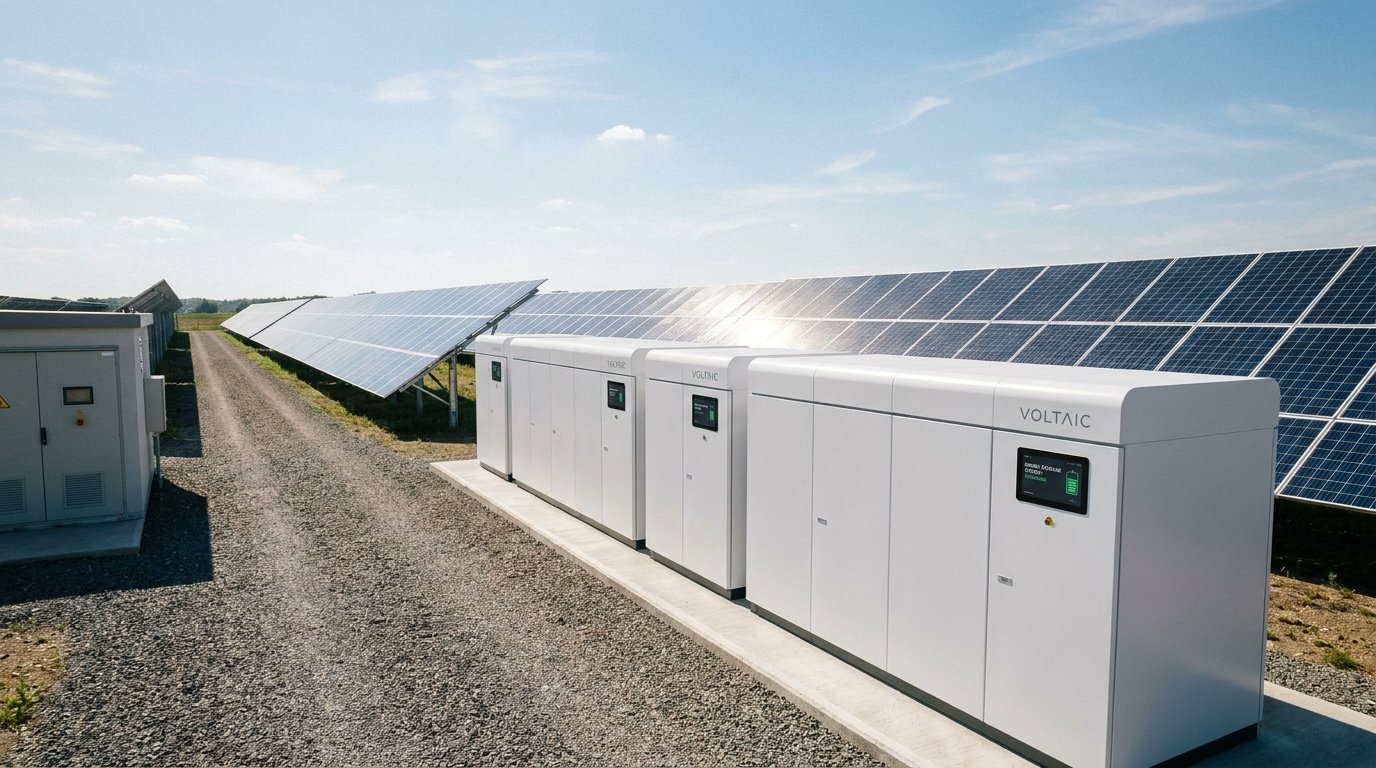
Battery energy storage system (BESS) structural design shares some overlap with solar racking design but carries its own considerations. Battery containers or enclosures are typically supported on concrete pads or pier foundations designed for the container’s specific point loads and, where relevant, seismic considerations, alongside wind loading on the container structure itself. Structural design also needs to account for access requirements for maintenance and emergency response, spacing between container rows for thermal and fire safety separation, and any bunding or containment structures required for the specific battery chemistry and site conditions.
Because BESS structural and civil design intersects closely with fire safety strategy, this is an area where early coordination between the structural engineer and the fire engineering input on a project tends to avoid rework, particularly around container spacing and access road design for emergency vehicles.
Why Soil Variability Matters Across a Single Site
One of the more common surprises on larger ground-mount sites is that soil conditions are rarely uniform across the full footprint. One corner of an array may sit on reasonable bearing capacity while another sits over softer or more variable material, meaning a single foundation type and depth specified uniformly across an entire site can be conservative in some areas and under-designed in others. A well-run geotechnical investigation and structural design process accounts for this variability directly, typically by zoning the site into areas with different foundation treatments rather than forcing a single specification across the whole array.
This is also why geotechnical investigation scope matters. A handful of test locations across a large site risks missing meaningful variability, while an appropriately scoped investigation gives the structural engineer enough confidence to zone the design sensibly rather than defaulting to a blanket conservative approach that inflates cost.
Coordination with Civil and Electrical Design
Structural design decisions ripple into both civil and electrical scope. Foundation type and post height affect earthworks and grading requirements. Table layout and row spacing affect cable trenching routes and lengths. Access road design needs to account for the plant required to install the selected foundation type, whether that is a pile driving rig, an auger for screw piles, or concrete trucks for pad footings. This is one of the clearest examples of why detailed design for solar and BESS projects is run as a coordinated, multidisciplinary process rather than three engineers working in separate silos and reconciling drawings at the end.
What to Do Next
If your project is approaching the point where foundation type and racking configuration need to be locked in against real geotechnical and wind data rather than assumptions, that is exactly the kind of decision worth getting right before procurement commits to a specific solution. AGILE Consulting Engineers works through structural design for Australian ground-mount solar and BESS projects as part of a coordinated detailed design process, and AGILE’s solar and BESS system design service is a sensible place to start that conversation.
FAQ
Why is wind loading usually the governing load case for ground-mount solar structures?
Racking and tracker tables present a large, light, flat surface close to the ground, so wind uplift and the resulting bending moments at post-to-rail connections typically dominate over the modest dead weight of the modules in most Australian wind regions.
Can desktop soil data be used instead of a site-specific geotechnical investigation?
Desktop mapping is useful for early feasibility screening, but detailed foundation design generally requires site-specific investigation, since published regional data does not capture the local soil variability that governs individual foundation design.
What are the common foundation types used for ground-mount solar in Australia?
Driven piles, screw piles, ballasted footings and concrete pad or pier foundations are the main families, with selection driven by soil conditions, water table, installation plant access and sometimes land reinstatement requirements.
Does BESS structural design differ from solar racking design?
Yes. BESS structural design centres on foundations for battery containers, spacing for thermal and fire safety separation, and access for maintenance and emergency response, alongside wind and seismic considerations on the container structure itself.
Why does soil variability across a single site matter for foundation design?
Bearing capacity and soil conditions can vary meaningfully across a large array footprint, so a well-scoped geotechnical investigation allows the structural engineer to zone foundation treatment rather than applying one conservative specification across the whole site.
Which standard governs wind actions for solar structural design in Australia?
The AS/NZS 1170 series, the joint Australian and New Zealand structural design actions standards, is the relevant framework, with wind loading assessed against the site’s specific wind region, terrain and exposure.
